

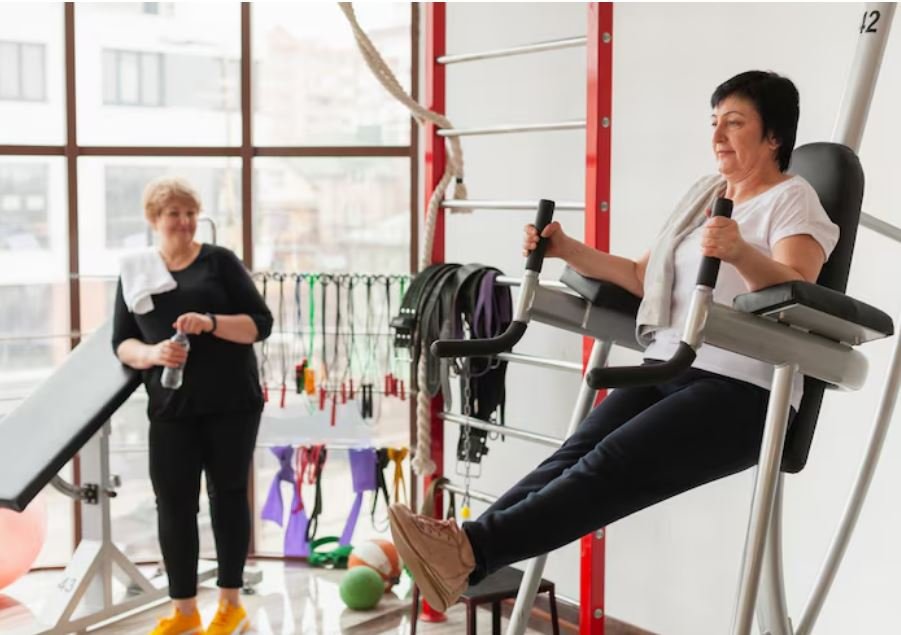
For years, the gym was a place of silent pressure, with members silently comparing themselves to others, trainers yelling corrections, and mirrors reflecting insecurities as much as form. The emergence of “no-judgment” fitness centers today signifies a subtle but significant change in the way people view fitness. Intentionally, these areas are softer, more welcoming, and emphasize the sensation of movement over physical appearance.
One of the first companies to popularize the phrase “Judgment Free Zone” was Planet Fitness. Its playful “Lunk Alarm” and purple walls came to represent acceptance. The concept gained traction, encouraging digital platforms like Joyn and other gyms like Crunch Fitness to rethink exercise as a means of empowerment rather than assessment. A strikingly successful cultural shift occurred when fitness shifted from being about appearances to being about authenticity.
| Focus Area | Description |
|---|---|
| Core Idea | “No-Judgment” workout studios are creating inclusive spaces where confidence, comfort, and personal progress matter more than perfection or performance. |
| Psychological Foundation | Encourages emotional well-being and self-acceptance through body-neutral, stress-free movement. |
| Industry Leaders | Planet Fitness, Crunch Fitness, Joyn, and boutique fitness studios fostering judgment-free zones. |
| Cultural Influence | Driven by Gen Z, social inclusivity, mental health awareness, and post-pandemic fitness reform. |
| Social Impact | Reduces gym anxiety, promotes mental resilience, and helps people reconnect with movement in a healthy way. |
| Reference | 2025 Fitness trends |
These studios have a particularly creative philosophy. It eliminates intimidation and hierarchy and substitutes empathy. There are fewer mirrors, trainers talk positively, and music playlists frequently have uplifting lyrics rather than beats that are too competitive. These minor variations can have a profound impact on someone who is visiting a gym for the first time.
For example, the slogan “No Judgment” served as the foundation for Crunch Fitness’ brand. The motto is a promise, not a decorative statement. Participants report feeling noticeably more liberated to try new things, fail fearlessly, and develop without comparison. The trainers emphasize effort over perfection. Despite its simplicity, that change is remarkably similar to therapy in motion because it uses trust rather than criticism to help people re-establish a connection with their bodies.
For newcomers who might find traditional gyms intimidating, Planet Fitness‘ strategy is especially helpful. Inexpensive memberships, upbeat branding, and a welcoming rather than competitive atmosphere have attracted millions of new members. Its rise is a reflection of the general desire for accessible fitness and the understanding that exercise should be pleasurable rather than taxing.
The trend is spreading to smaller studios. For instance, Joyn Fitness has developed a body-neutral platform. Its instructors emphasize inclusivity while teaching dance, yoga, and strength training, and they come from a variety of backgrounds. There is no pressure to “fix” one’s body, no diet talk, and no calorie counting. Gen Z has embraced this model in particular because they value authenticity and mental balance over metrics when it comes to wellness.
People were able to move freely at home thanks to the rapid evolution of digital fitness culture during the pandemic. With cameras away and criticism gone, many people found the enjoyment of working out again without worrying about their performance. Expectations were altered by that experience. The need for psychological comfort and privacy remained even after gyms reopened. Studios that were able to strike a balance between compassion and community prospered.
Psychologists have found that people become more motivated when they feel accepted. “Removing comparison allows genuine connection with movement,” says Dr. Elena Martins, a behavioral expert in health psychology. Her findings demonstrate how self-acceptance frequently results in consistency, which is essential for long-term wellbeing. Compared to external validation, this shift toward intrinsic motivation is noticeably more sustainable.
Celebrities are also supporting this concept. Exercise should be viewed as joy rather than penance, and Lizzo’s “Big Grrrls” movement and her partnership with Peloton both embody this “no-judgment” philosophy. The focus of Rebel Wilson’s changing fitness discourse has shifted from weight to wellness. Their anecdotes humanize the process and serve as a reminder to audiences that progress need not be made publicly and that fitness is a personal matter.
Social media, which is sometimes blamed for encouraging comparison, is gradually evolving into a platform for genuineness. Influencers such as Jessamyn Stanley demonstrate self-compassion and vulnerability through their platforms. Their communities are inspired to “move how you want, not how you’re told,” a sentiment that has caught on in online communities. People from various cultures and body types can now share what movement means to them in these highly adaptable online communities.
The impact on the broader industry is equally impressive. The language and design of gyms are changing as a result of inclusive studios. New trainers are receiving trauma awareness and sensitivity training, and weight rooms are being remodeled to feel welcoming. Accessibility is now a top priority for membership models, which provide sliding-scale fees, smaller class sizes, and quiet hours. In addition to being morally right, this wave of inclusivity is very effective at engagement and retention.
Integration of mental health is another significant advancement. Studios are providing classes that combine mobility and breathwork, sensory-friendly areas, and meditation nooks. Fitness is increasingly viewed as a form of mental and physical therapy. That way of thinking is especially creative because it demonstrates that softness and strength can coexist.
Not everyone agrees, of course. A “no-judgment” approach, according to some traditionalists, runs the risk of complacency. However, proponents argue that accountability and kindness can coexist. While respecting effort, a helpful trainer can still direct improvement. The goal is to redefine challenge, not to eradicate it.
People’s entire perspective on exercise is being shaped by this redefinition. Self-directed discipline—the kind that arises from compassion rather than coercion—is encouraged in “no-judgment” gyms. By providing care, they assist members in developing consistency. Although that change may not seem like much, it has a significant cultural impact.
